What Would It Take for Belitong Island to Withstand a Global and National Crisis?
By Arry Aditsya Yoga07 Nov 2026
19 min read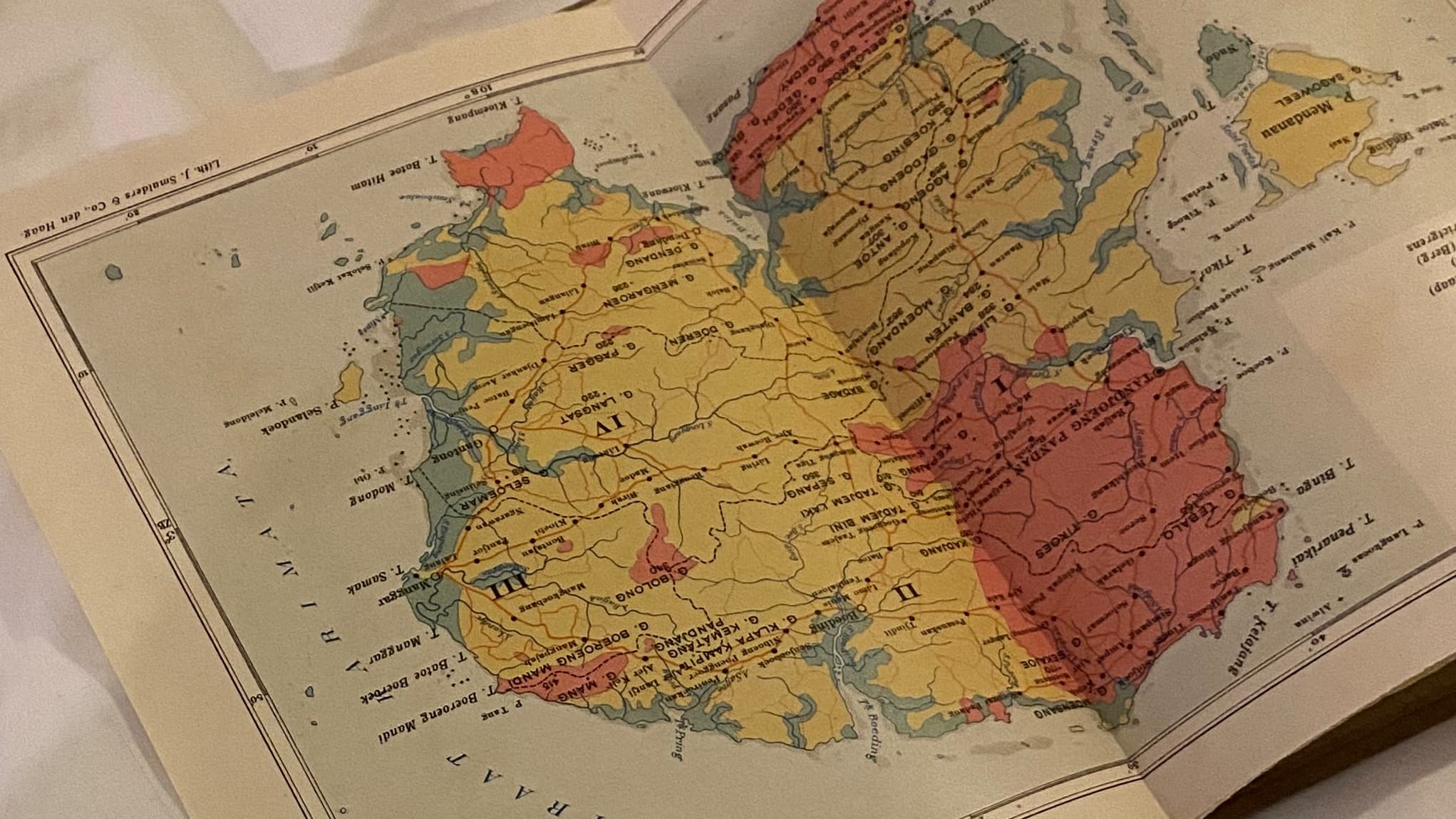
"If an island loses the resource that once made it wealthy, does it remain the same island, or does only its name survive on the map?" - Arry Aditsya Yoga
This question echoes the Ship of Theseus paradox; when the foundations of an entity are gradually replaced, what ultimately preserves its identity? Belitong offers a compelling historical and strategic case through which to examine this dilemma. During the nineteenth century, the island emerged as a significant centre of the global tin industry, becoming deeply embedded in international trade and colonial extractive systems. Yet tin represents only one chapter of a much longer history.
The discovery of the Belitung (or Batu Itam) Shipwreck in 1998, a ninth-century Arab dhow carrying an extraordinary cargo of Tang Dynasty ceramics, revealed Belitong’s place within early transoceanic trade networks connecting the Middle East, Southeast Asia, and China. Meanwhile, suspected megalithic remains at Gunong Riting, Membalong, discussed by Professor M. Dien Madjid, historian at UIN Syarif Hidayatullah Jakarta, in Sejarah Bangka Belitung: Dari Masa ke Masa, point towards another potentially significant dimension of the island’s prehistoric to historic heritage.
Together, these historical trajectories challenge the reduction of Belitong to a former tin-producing territory. Its identity is also constituted by archaeological heritage, maritime connectivity, geological evolution, cultural memory, and human settlement. The more consequential question is this: as global resource dependencies shift, geopolitical configurations change, and ecological pressures intensify, what strategic identity should Belitong construct beyond the extractive economy that once defined its prosperity?
Belitong subsequently sought to reposition itself as a tourism destination and UNESCO Global Geopark. Yet, this economic transition has not entirely displaced the island’s historical exposure to commodity-dependent economic structures and fluctuations in global markets. The two regencies comprising Belitong Island, Belitung and East Belitung, had a combined projected population of approximately 327,930 in 2025, according to the Provincial Statistics Agency (BPS). This represents a substantial population whose long-term socioeconomic security depends on the island’s capacity to diversify its economic foundations and reduce external vulnerabilities.
As 2030 approaches, the more consequential question is no longer simply how can Belitong remain what it has always been?, but rather; what must endure for Belitong to transform without losing its capacity to survive?
In 1973, ecologist C.S. Holling introduced the concept of ecological resilience in his seminal paper, Resilience and Stability of Ecological Systems. He distinguished resilience from stability, whereas stability concerns a system’s tendency to return towards equilibrium following disturbance, resilience concerns its capacity to absorb disturbances and reorganise while retaining its essential functions and identity. Nassim Nicholas Taleb, through Antifragile: Things That Gain from Disorder, extends this intellectual framework beyond resilience. He argues that certain systems can do more than withstand volatility, they can actually benefit from shocks, uncertainty, and disorder.
Drawing upon these conceptual foundations, this analysis examines Belitong’s strategic capacity to navigate two interconnected domains of systemic risk. The first encompasses global disruptions, including supply-chain fragmentation, climate change, commodity-market volatility, and intensifying great-power competition. The second concerns national and domestic vulnerabilities, particularly energy and electricity security, fiscal capacity, policy uncertainty, and institutional governance.
The analytical horizon is deliberately set at 2030, not as a deterministic prediction, but as a strategic planning threshold. This timeframe coincides with the deadline of the United Nations Sustainable Development Goals and falls within the five-year climate prediction window of the WMO’s 2026–2035 Global Annual-to-Decadal Climate Update, which includes projections for 2026–2030. Ultimately, the central question is not simply whether Belitong can survive the next crisis, but whether it can develop the institutional, economic, ecological, and societal capacities to anticipate disruption, absorb systemic shocks, and reorganise itself without sacrificing the foundations of its long-term viability.
The paradox of tin and rare earth elements lies in their dual potential, they may become instruments of economic recovery and strategic industrialisation, yet, under weak institutional governance, they may also reproduce the conditions of economic dependency, ecological degradation, and social instability that have historically constrained the island’s development. This concern resonates with the resource-curse hypothesis developed by Sachs and Warner (1995), whose empirical research identified a negative association between natural-resource export dependence and subsequent economic growth. The resurgence of commodity revenues in 2025–2026 should therefore be interpreted not as definitive evidence of economic resilience, but as an initial test of whether Belitong can convert resource wealth into durable development.
On 14 August 2026, President Prabowo Subianto stated that the government had closed approximately 1,000 illegal tin-mining locations across the Bangka Belitung Islands by the end of 2025. In the same address, he highlighted the improvement in PT Timah’s financial performance (Presidential Secretariat 2026). The company’s net profit reached IDR 2.71 trillion in the first half of 2026, compared with IDR 300.07 billion in the corresponding period of 2025 (PT Timah 2026).
Although this represents an increase of approximately ninefold, the improvement should not be attributed exclusively to enforcement against illegal mining. Changes in selling prices, sales volumes, and operational performance must also be considered. Indeed, PT Timah reported a substantial increase in the average London Metal Exchange tin price during the same period (PT Timah 2026). Corporate profitability, therefore, cannot independently demonstrate improvements in institutional governance, environmental recovery, or community welfare.
At the regional level, the Bangka Belitung Islands Province recorded economic growth of 4.53 percent year-on-year in the first quarter of 2026 (BPS-Statistics of Kepulauan Bangka Belitung Province 2026a). However, the composition of this growth requires careful examination. Accommodation and food services were among the principal contributors, while the mining and quarrying sector contracted on a quarter-to-quarter basis. This distinction matters because aggregate economic growth does not necessarily indicate a reduction in structural vulnerability. A regional economy may experience improved growth while remaining exposed to commodity-price volatility, concentrated sources of income, and weak economic diversification.
Reports drawing on BPK audit findings documented substantial fluctuations in the number of identified illegal mining locations within Belitung’s mining areas during early 2025 (Bisnis Indonesia 2025). Meanwhile, law-enforcement operations in February and August 2026 uncovered approximately 16 and 28 tonnes of illegally traded tin sand, respectively, in Belitung Timur, with the latter shipment allegedly intended for Malaysia (Indonesian National Police 2026). These incidents suggest that illegal extraction cannot be understood merely as an isolated enforcement problem. It must also be examined as part of a wider political-economic system involving mineral collection, financing, transportation, commercial intermediaries, and cross-border trade.
The regulatory response emerged through Presidential Regulation No. 79 of 2026, concerning the accelerated improvement of tin-mining governance in the Bangka Belitung Islands Province (Republic of Indonesia 2026). Its implementation raises a critical institutional question: can the formalisation of community mining and mineral supply chains establish genuine traceability, or might weak verification mechanisms inadvertently create opportunities for illegally sourced minerals to enter legitimate markets? The distinction between regulatory intervention and effective institutional transformation is fundamental.
The prospect of rare earth element extraction introduces an additional dimension. Monazite, a mineral associated with tin-mining residues in Bangka Belitung, contains valuable rare earth elements as well as radioactive constituents, including thorium and uranium. Technical literature on monazite processing and mineral recovery highlights the need to address radiological safety, waste management, and environmental protection alongside economic feasibility (International Atomic Energy Agency n.d.). Consequently, the presence of rare earth-bearing minerals should not automatically be interpreted as proof of economically recoverable reserves or as a justification for expanding extraction without adequate safeguards.
For Belitong, the strategic question is therefore not simply whether tin or rare earth elements can generate another economic boom. It is whether the island possesses the institutional capacity to transform mineral wealth into productive investment, technological capabilities, skilled employment, fiscal resilience, environmental restoration, and intergenerational prosperity. Without these conditions, the transition from tin to rare earth elements risks becoming a change in the composition of extraction rather than a genuine transformation of the development model.
One of the most consequential manifestations of national vulnerability in 2026 has emerged not from financial markets, but from the electricity system. A series of power disruptions across Java and Sumatra exposed the fragility of Indonesia’s electricity infrastructure, particularly its vulnerability to transmission failures, extreme weather, and the operational constraints of a generation system heavily dependent on fossil fuels. Mongabay reported that the disruption on 22 May 2026 affected approximately 13.1 million PLN customers across parts of Sumatra. A subsequent incident on 4 June, when extreme weather reportedly brought down twelve transmission towers, triggered further rolling blackouts in parts of North Sumatra.
The May disruption was associated with a transmission fault that caused cascading failures across the interconnected electricity system, while the recovery process was complicated by the longer restart requirements of coal-fired thermal power plants (Luh De Suriyani 2026; Ministry of Energy and Mineral Resources 2026). These incidents demonstrate that national energy security cannot be measured solely by installed generation capacity. It also depends on the reliability of transmission infrastructure, the flexibility of electricity networks, the availability of reserve capacity, and the ability of the system to recover rapidly from disruptions.
The scale of Indonesia’s renewable energy ambition is nevertheless significant. By December 2025, the country’s installed solar photovoltaic capacity had reached approximately 1,494.1 MW, according to the Ministry of Energy and Mineral Resources (2026a). On 25 August 2026, President Prabowo Subianto formally launched the national 100 gigawatt-peak (GWp) solar programme, beginning with fourteen projects across six provinces with an announced combined capacity of 5.3 GWp (Presidential Secretariat 2026).
Compared with the 2025 installed solar capacity, the 100 GWp target represents approximately 67 times the existing capacity, although the comparison should be understood as indicative because GWp represents peak photovoltaic capacity and does not directly correspond to the electricity actually delivered to the grid. The programme therefore, represents not merely an expansion of generation infrastructure but a substantial institutional and technological challenge involving financing, domestic manufacturing, battery storage, grid integration, land availability, and regional implementation. Its strategic significance will ultimately depend on whether national ambitions can be translated into reliable electricity access at the local level.
Belitong already offers a small but instructive example of what decentralised energy infrastructure can achieve. On Pulau Rengit, Kabupaten Belitung, a 78 kWp solar power installation has replaced the island’s previous reliance on diesel-generated electricity, which had reportedly been available for approximately twelve hours per day. The new system provides round-the-clock electricity to 44 households, representing approximately 200 residents (Nurmutia 2026).
Its implications extend beyond household electrification. This illustrates how energy infrastructure can influence the economic value of local production, strengthen post-harvest capacity, and improve the livelihood opportunities of small-scale fishing communities. Nevertheless, Pulau Rengit’s installation should be understood as a local demonstration rather than evidence of island-wide energy security. Its relatively limited capacity cannot establish whether the main island of Belitung has adequate generation reserves, sufficient transmission redundancy, or the capacity to maintain electricity supply during prolonged disruptions. Publicly accessible information on Belitung’s reserve margin, peak demand, generation mix, feeder configuration, and contingency arrangements remains insufficient for a rigorous assessment. These are precisely the indicators that should be disclosed before the island’s long-term energy resilience can be meaningfully evaluated.
Food security presents a similarly important structural challenge. According to BPS data reported by Katadata’s Databoks, the prevalence of undernourishment (PoU) in Kabupaten Belitung declined from 11.26 percent in 2024 to 9.39 percent in 2025. Despite this improvement, the figure remained above Indonesia’s national prevalence of 7.89 percent in 2025, leaving a gap of 1.50 percentage points (Fadhlurrahman 2026). Using the BPS provincial population projection of 193,560 residents for Kabupaten Belitung in 2025, the reported prevalence corresponds to an indicative population equivalent of approximately 18,170 people.
This calculation should not be interpreted as a verified headcount of individuals experiencing food deprivation, since PoU is a statistical estimate of habitual dietary energy inadequacy rather than a direct enumeration of affected residents. Nevertheless, it provides a useful indication of the scale of underlying vulnerability. A population experiencing inadequate access to sufficient dietary energy is likely to have less capacity to absorb additional pressures arising from rising food prices, disrupted maritime transportation, adverse weather, or interruptions in inter-island supply chains.
The strategic implication is that food security must be treated as more than a matter of agricultural production. For an island economy, it is also a question of logistical continuity, maritime connectivity, cold-chain infrastructure, local purchasing power, storage capacity, and the ability to maintain essential supplies when external distribution networks are disrupted. The fisheries sector, particularly small-scale crab fisheries, offers an existing productive foundation that could be strengthened through reliable electricity, refrigeration, improved handling facilities, and more effective connections between fishing communities and markets.
In parallel, Kampong Reklamasi Selinsing in Belitung Timur demonstrates how selected post-mining landscapes can be rehabilitated and reorganised into productive spaces combining agriculture, livestock, nurseries, and educational tourism (PT Timah 2024). However, this example should not be generalised to all former mining areas. Research on post-tin-mining land in Bangka and Belitung has documented substantial differences in soil conditions, fertility, and agricultural suitability, indicating that productive rehabilitation requires site-specific assessment, soil improvement, and long-term environmental management.
Taken together, these examples point towards a broader conception of strategic resilience for Belitong. The objective should not simply be to increase the number of solar installations or expand local food production, but to develop an integrated system capable of sustaining essential services under conditions of disruption. By 2030, a credible resilience agenda should include transparent electricity-system data, diversified and decentralised energy sources, adequate storage and backup capacity, strengthened maritime food logistics, improved cold-chain infrastructure, productive fisheries, and the rehabilitation of suitable post-mining land.
The proposed reduction of Belitung’s PoU from 9.39 percent towards or below the 2025 national benchmark of 7.89 percent could serve as one measurable policy objective, provided that subsequent comparisons use consistent statistical definitions and updated population data. Ultimately, the island’s strategic autonomy will depend less on its ability to generate another cycle of economic expansion than on its capacity to maintain electricity, food availability, and productive livelihoods when the systems on which it depends are placed under stress.
Yet, the resilience of an island cannot be assessed solely through the continuity of its physical infrastructure and material supply systems. As economic activities, public administration, financial transactions, and essential services become increasingly interconnected through digital networks, the nature of strategic vulnerability is also changing. Electricity, food distribution, maritime transportation, and public services are no longer dependent exclusively on physical infrastructure, they are increasingly sustained by telecommunications networks, digital platforms, data systems, and external technological providers. Consequently, a disruption that originates outside the island may affect its internal operations without requiring any direct physical intervention. This introduces a further dimension to Belitong’s strategic resilience: its capacity to withstand cyber threats, geopolitical instability, and the disruptive consequences of technological transformation.
The changing international security environment requires a broader understanding of what constitutes a threat to territorial stability. Cyberattacks, economic coercion, maritime disruption, technological competition, and information manipulation increasingly operate alongside conventional military capabilities. For an island economy such as Belitong, these developments are particularly relevant because its economic continuity depends on systems that extend beyond its geographical boundaries. The security of the island is therefore connected not only to the protection of its territory, but also to the reliability of the digital, logistical, financial, and technological networks through which it participates in the wider national and international economy.
Cybersecurity has become an essential component of economic and institutional resilience. As electricity networks, telecommunications, banking services, port administration, transportation systems, and government databases become increasingly digitised, their operational efficiency is accompanied by greater exposure to cyber incidents. The disruption of a single digital service may generate consequences across several interconnected sectors, particularly when alternative systems and recovery mechanisms are insufficient.
For Belitong, the principal concern is not necessarily the likelihood of a sophisticated cyberattack targeting the island directly, but the possibility that disruptions affecting national infrastructure providers, telecommunications operators, financial institutions, or digital service platforms could propagate into the local economy. A disruption to digital payment systems, for example, could affect tourism businesses, retailers, transport operators, and small-scale enterprises. Similarly, an incident involving telecommunications infrastructure could complicate emergency coordination, maritime communication, and the delivery of essential public services. Such vulnerabilities are particularly important in geographically dispersed territories, where physical distance and limited infrastructure redundancy may complicate the restoration of disrupted services. A cyber incident affecting an external service provider could therefore produce local consequences even when the island’s own institutions are not directly compromised.
The strategic implication is that cybersecurity should be incorporated into the planning of critical infrastructure rather than treated exclusively as an information-technology concern. Belitong requires an assessment of its digital dependencies, including electricity operations, telecommunications, port administration, financial services, government systems, and essential commercial platforms. Particular attention should be given to data protection, alternative communication arrangements, operational continuity, incident reporting, and institutional coordination during emergencies.
Beyond digital vulnerability, geopolitical instability represents another source of external disruption that could influence Belitong’s economic and institutional stability. The contemporary international system is increasingly shaped by strategic competition among major powers, the securitisation of critical mineral supply chains, maritime disputes, economic sanctions, and the restructuring of global trade relationships. Although Belitong is geographically distant from the principal centres of military confrontation, its exposure to international markets and maritime distribution networks means that geopolitical developments may generate significant consequences for the island.
Potential escalation in the Taiwan Strait or the South China Sea deserves particular attention. These areas occupy important positions within the Indo-Pacific’s maritime and commercial architecture. A military confrontation, prolonged maritime blockade, or serious deterioration in regional security could disrupt shipping confidence, increase insurance premiums, alter commercial routes, and intensify volatility in international commodity markets. Such scenarios should not be interpreted as predictions of imminent war. They should instead be incorporated into strategic planning as plausible external shocks with potentially substantial economic consequences.
The effects of geopolitical escalation would most likely emerge through several interconnected channels. First, disruption to international shipping and regional supply chains could increase the cost and reduce the availability of imported machinery, electronic components, medicines, fertilisers, industrial equipment, and consumer goods. Second, instability in global energy markets could increase the cost of fuel, electricity generation, maritime transportation, and fishing operations. Third, changes in international demand for strategic minerals could generate new investment opportunities while simultaneously intensifying extraction pressures and competition over resource governance.
The latter presents a particularly important paradox for Belitong. As global industries become increasingly dependent on strategic minerals, the economic value of tin and other mineral resources may rise. However, higher international demand does not automatically translate into sustainable regional development. Without effective institutional oversight, traceable supply chains, environmental safeguards, and mechanisms for local value creation, geopolitical competition over minerals may reinforce the same patterns of resource dependency that have historically constrained the island’s economic transformation.
Therefore, it should not be to position Belitong merely as a supplier of increasingly valuable commodities. It should be to strengthen the island’s capacity to capture productive value, develop technological competencies, maintain environmental integrity, and protect local economic interests under changing international conditions. While cybersecurity and geopolitical instability represent potential sources of disruption, artificial intelligence introduces a more gradual but potentially transformative challenge to Belitong’s development trajectory. AI is changing how economic activities are organised, how information is processed, how institutions make decisions, and how technological capabilities are distributed between countries, corporations, and local communities.
AI could create significant opportunities in tourism management, fisheries, mineral governance, environmental monitoring, logistics, education, and public administration. Satellite-based analysis and machine-learning applications, for example, could support the identification of land-cover changes, monitor post-mining rehabilitation, and assist in detecting potentially illegal extraction activities. In fisheries, predictive analytics could improve weather-related decision-making, post-harvest management, cold-chain operations, and access to market information. In tourism, AI could strengthen destination management, analyse visitor behaviour, support multilingual interpretation, and improve the management of ecologically sensitive sites.
However, the strategic implications of AI extend beyond productivity improvements. The distribution of technological power may increasingly depend on who owns the underlying data, controls the computing infrastructure, develops the algorithms, and determines access to digital platforms. If local institutions and businesses rely excessively on external technology providers without developing their own analytical capabilities, AI adoption may create a new form of structural dependency. Belitong could become more technologically connected while remaining institutionally dependent on systems whose governance, infrastructure, and economic benefits are largely controlled elsewhere.
Belitong’s future cannot be separated from the transformation of the global strategic environment. Its proximity to the Karimata Strait, part of Indonesia’s strategic maritime routes, connects the island to the wider dynamics of maritime security, international trade, and Indo-Pacific geopolitical competition. Tensions in the South China Sea, US–China rivalry, the development of AUKUS, cyber threats, and the accelerating advancement of artificial intelligence are not distant concerns simply because Belitong lies far from the world’s major centres of power. Their consequences may reach the island through disruptions to energy and food supplies, logistics, investment, and the digital infrastructure that sustains its economy and society.
The interaction between geopolitical instability, cyber threats, and technological transformation suggests that Belitong should not prepare for a single anticipated crisis. Instead, regional planning should consider several plausible scenarios and examine how each could affect the continuity of essential services, economic activity, and institutional stability. A credible strategic foresight framework must therefore evaluate not only the probability of individual threats, but also their potential interactions and cascading consequences.
For example, geopolitical escalation could simultaneously increase fuel prices, disrupt maritime logistics, and intensify demand for strategic minerals. If these pressures coincided with a cyber incident affecting financial or telecommunications infrastructure, the resulting disruption could be significantly more difficult to manage than any individual event considered in isolation. Such compound risks demonstrate why conventional sectoral planning may be insufficient for an island economy whose essential systems are closely interconnected.
Before 2029-2030, Belitong should therefore establish an integrated regional resilience framework encompassing critical infrastructure protection, cybersecurity preparedness, maritime and supply-chain continuity, responsible AI adoption, and institutional coordination. This framework should be supported by periodic risk assessments, cross-sectoral contingency planning, and exercises designed to evaluate the ability of local institutions to maintain essential services during prolonged disruptions.
Therefore, Belitong’s challenge towards 2029-2030 is not merely to sustain economic growth, but to develop the institutional capacity to remain functional when the systems underpinning its prosperity become unreliable. Energy, food, maritime, technological, and institutional resilience must be treated as interconnected priorities within a coherent regional strategy. Belitong does not need to detach itself from the wider world; it must, however, manage its external dependencies without surrendering control over its future.
Can Belitong transform itself into a region that is not merely economically productive during periods of stability, but also institutionally capable of remaining functional when the systems supporting its prosperity become unreliable?